Plating Options for Interconnect Components
Astec Precision provides expert guidance from a precision manufacturing perspective on how gold, nickel, tin, and speciality coatings and plating may affect the conductivity, wear resistance and longevity of interconnect parts.
Introduction to Plating Options for Interconnect Parts
Selecting the right plating for interconnect parts is a crucial decision in electronics design and manufacturing.
The choice influences not only electrical performance but also durability, corrosion resistance and overall reliability.
From gold to nickel to tin and various speciality coatings, each option brings unique benefits – and trade-offs.
As trusted precision manufacturers in the UK interconnect industry, we aim to guide designers, specifiers and purchasers through the complexities of plating, helping you make decisions that optimise your parts’ performance while meeting cost and environmental requirements.
Key Insights
- Plating affects conductivity, durability and corrosion resistance, all of which are essential criteria for interconnect performance.
- Gold is superior for high-frequency, high-reliability applications due to its conductivity and corrosion resistance.
- Nickel is solid and wear-resistant, and is often used as a base layer under gold.
- Tin is cost-effective as it’s excellent for soldering; a suitable option for consumer electronics.
- Speciality coatings: you can opt for tailored alloys like silver or palladium for niche or extreme applications.
- Material selection should balance electrical, mechanical, environmental and budget requirements.
- Emerging trends: lead-free coatings, thin films and advanced alloys are shaping the future of interconnect plating.
What is plating and why does it matter for interconnect?
Plating is a thin metallic coating applied to interconnect surfaces to improve conductivity, resist wear and protect against corrosion.
Plating is a critical performance factor, not only a surface finish for a part. The materials used, their thickness and application method all influence how a connector performs over its lifetime.
For example, without proper plating, a copper pin could oxidize, reducing conductivity and causing intermittent connections. Similarly, repeated mechanical mating can wear down unprotected surfaces, leading to premature failure.
Plating also plays a role in thermal management. Certain coatings improve heat dissipation, preventing hotspots in high-current applications. In essence, the choice of plating can make the difference between a reliable system and one prone to failure, particularly in high-performance or harsh-environment applications.

What are the benefits of gold plating on interconnect components?
Gold plating ensures exceptional conductivity, corrosion resistance and reliable performance over repeated mating cycles.
Gold has long been considered the premium choice for interconnect components due to its desirable properties. Its electrical conductivity is high, which means signals pass through with minimal resistance. This makes gold-plated components ideal for high-frequency or precision applications, such as medical devices, aerospace systems, and high-end computing.
One of the defining advantages of gold is its resistance to oxidation. Unlike other metals, gold does not tarnish or corrode, maintaining consistent electrical performance over time. In environments where connectors are exposed to humidity, chemicals or fluctuating temperatures, gold plating preserves the integrity of the connection.
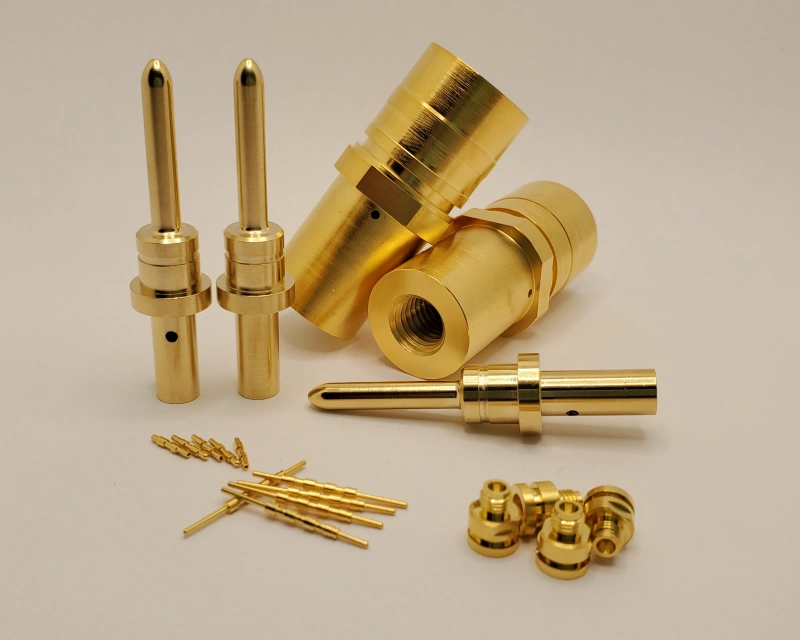
Gold is also forgiving in terms of wear. While soft, it accommodates repeated mating cycles without causing significant degradation. Designers can rely on gold-plated interconnect parts as they remain functional over thousands of insertion and removal cycles, which is essential for test equipment or modular systems.
However, gold plating is expensive, which is why manufacturers often use thin gold layers over a more cost-effective base metal such as nickel. This approach balances performance with cost-efficiency, ensuring critical contact areas receive the benefits of gold without unnecessary expense.
Why is nickel plating used on interconnect parts?
Nickel is renowned for its hardness, durability and corrosion resistance. It often acts as a protective base for gold or other coatings.
Nickel is significantly harder than gold, which gives plated components mechanical strength and wear resistance. It is commonly used as a barrier layer beneath gold to extend the lifespan of the contact and prevent diffusion between the base metal and the gold. This layered approach is standard in high-reliability connectors.
Beyond its mechanical properties, nickel is also an excellent protector against corrosion. It forms a stable oxide layer that shields the underlying metal from environmental degradation. While not as conductive as gold, nickel provides an effective compromise between performance, durability and cost.
In industrial and automotive applications, nickel plating is widely used for its ability to withstand harsh operating conditions, including high temperatures, humidity and exposure to oils or chemicals. When gold is added on top, the parts’ corrosion resistance improves; the hardness of nickel coupled with the conductivity and reliability of gold produces a high-performance connector suitable for demanding applications.

When should tin plating be considered?
Tin plating is a cost-effective option for interconnect components. Tin offers good solderability and moderate corrosion resistance, making it suitable for many commercial and consumer applications.
Tin is widely used in the electronics industry because it simplifies assembly processes. Its excellent solderability ensures reliable connections when components are mounted on printed circuit boards, for example. Tin-plated connectors are common in consumer electronics, large-scale manufacturing and applications where cost-efficiency is a priority.
While tin is softer than nickel, it provides adequate durability for many applications. Its corrosion resistance is generally sufficient for indoor or controlled environments, although it can oxidize over time, particularly in humid or industrial settings. To mitigate this, manufacturers often use tin-lead alloys or modern lead-free alternatives that maintain performance while complying with environmental regulations such as RoHS (Restriction of Hazardous Substances in Electrical and Electronic Equipment).
Tin plating is especially valuable when it comes to high-volume production demands as you can balance cost with reasonable performance. For applications where connectors are rarely disconnected, tin can provide a reliable and economical solution without compromising assembly efficiency.
What are speciality coatings and when are they used?
Astec Precision offer speciality coatings for interconnect components. Each coating is tailored to meet your system’s unique performance requirements, offering enhanced wear resistance, chemical protection or extreme conductivity.
Speciality coatings include metals and alloys such as palladium, silver or mixed-metal composites. These coatings are used in niche applications where standard gold, nickel or tin might not provide sufficient performance. For instance, palladium offers excellent corrosion resistance and moderate conductivity, making it suitable for medical or high-reliability military applications. Silver, whilst vulnerable to tarnishing, delivers outstanding conductivity, ideal for RF or high-speed digital connectors.
Read more about materials used by Astec Precision.

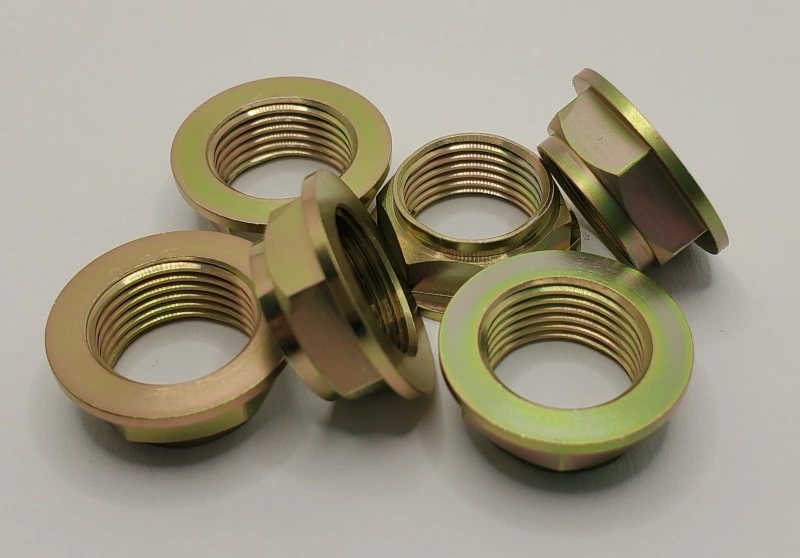
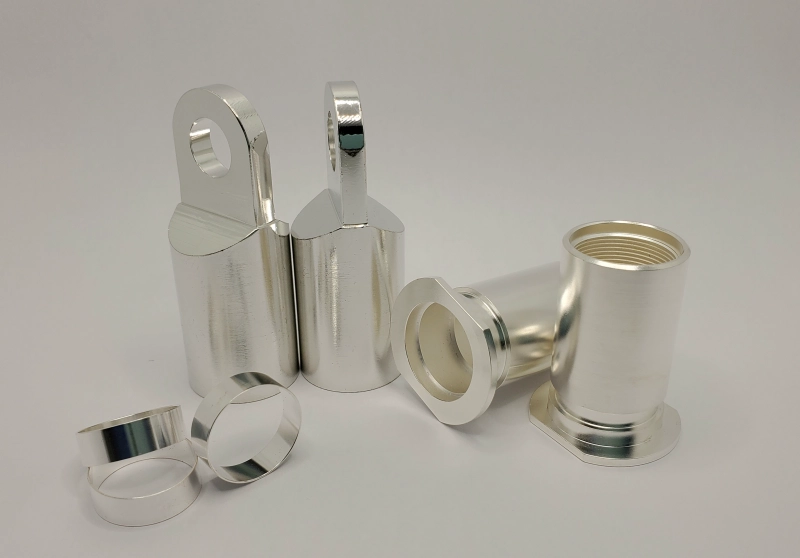
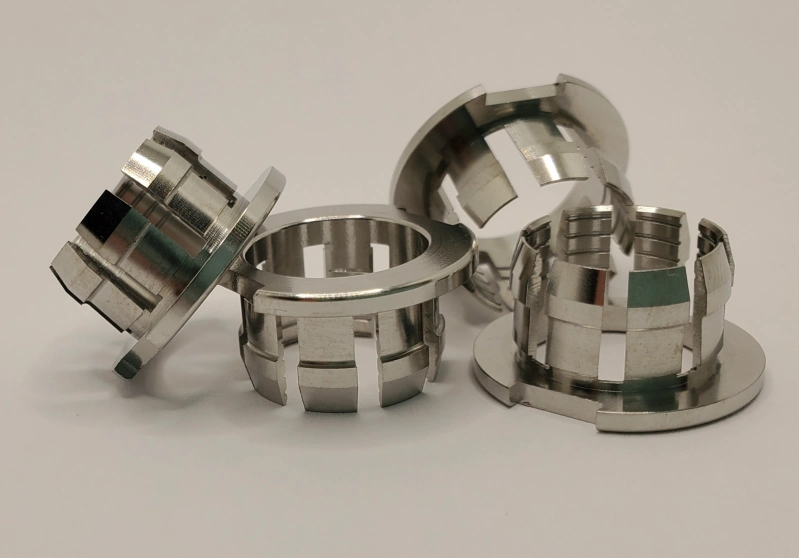
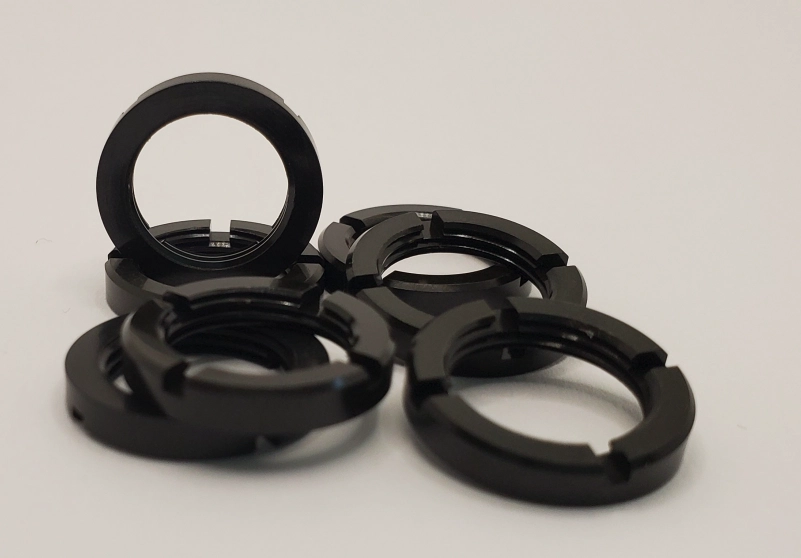
Some speciality coatings are engineered to withstand extreme environments, including high temperatures, aggressive chemicals or frequent mating cycles. Others are designed to provide a balance of properties, such as hardness, conductivity and corrosion protection, depending on your application’s specific needs.
Choosing a custom coating for interconnect parts often involves collaboration with the manufacturer to ensure the coating matches the operational demands of the connector. You also want your selections to be cost-effective for your project. Plating and coating helps your parts achieve the high performance that standard materials cannot provide.
How does plating affect interconnect performance?
The right plating improves electrical efficiency, mechanical reliability and component longevity.
Plating directly influences how well a connector performs under electrical, mechanical and environmental stresses. Electrical performance depends on conductivity and contact resistance. Materials like gold and silver minimise resistance and signal loss, which is essential for high-speed or precision applications.
Mechanical performance relates to how well the plating withstands repeated insertion cycles. Softer metals like gold can deform slightly to ensure a tight connection without damaging mating surfaces, while harder metals like nickel resist wear under repeated stress.
Environmental performance involves resistance to corrosion, oxidation and chemical exposure. Gold remains stable under nearly all conditions, while tin and nickel may require additional layers or protective measures in harsh environments.
Ultimately, your plating choice must balance these factors, along with cost and operational requirements. The right combination ensures your connectors perform reliably for the intended service life, even in demanding conditions.
How to choose the right plating for your interconnect parts
Consider your application’s electrical, mechanical, environmental and budgetary requirements when selecting a plating.
Choosing the right plating involves several factors:
- Signal requirements: high-frequency or precision applications benefit from gold or silver.
- Mechanical stress: frequent mating cycles require wear-resistant coatings like nickel or gold over nickel.
- Environmental conditions: corrosive or high-temperature environments need corrosion-resistant coatings, often gold or custom alloys.
- Budget constraints: tin or nickel may suffice for cost-sensitive, low-stress applications.
- Regulatory compliance: lead-free or RoHS-compliant coatings may be necessary in certain markets.
By evaluating these factors, designers can specify plating that ensures reliability, longevity and optimal performance while controlling costs. Manufacturers with precision plating expertise, like Astec Precision, can advise on the best combinations for your application, including multi-layer approaches that balance performance and cost.
What trends are shaping interconnect plating technology?
Many industry trends are leading towards sustainability, miniaturisation and performance optimisation.
Some trends are driven by environmental regulations, such as the shift toward lead-free coatings. Thin-film technologies reduced material use but maintain electrical and mechanical performance, which is especially important for compact or lightweight connectors such as for the aerospace and motorsport industries. Advanced alloys and composite coatings extend the operational life of components in extreme environments, from aerospace to industrial automation.
Automation and process control are improving consistency in plating thickness and quality, reducing component defects thus enhancing reliability. As applications become more demanding, especially in high-speed and high-frequency electronics, plating technology continues to evolve to meet these requirements without significantly increasing costs.
Work with Astec Precision for your Interconnect Project
Choosing the right plating options for interconnect components is a critical decision. It can impact the products’ performance, reliability and lifespan.
As we have shown, gold, nickel, tin and other speciality coatings from a range of materials each offer distinct benefits, such as superior conductivity, corrosion resistance, mechanical durability and cost efficiency. By understanding how each material affects your interconnect parts’ electrical, mechanical and environmental performance, as a designer, specifier or purchaser you want access to expert guidance to assist decision-making and helping you meet both the technical requirements and budget constraints of your project.
Partnering with Astec Precision, a leading UK precision interconnect manufacturer, ensures you are always privy to informed guidance that supports every aspect of your project’s needs.
Working with us gives you a range of optimised plating solutions, and resilient components that consistently deliver reliability and longevity in every demanding application. Get in touch with our team for an initial consultation. We look forward to hearing from you.