
Anatomy of an Interconnect Component: An Expert Guide
Introduction to the anatomy of an interconnect component
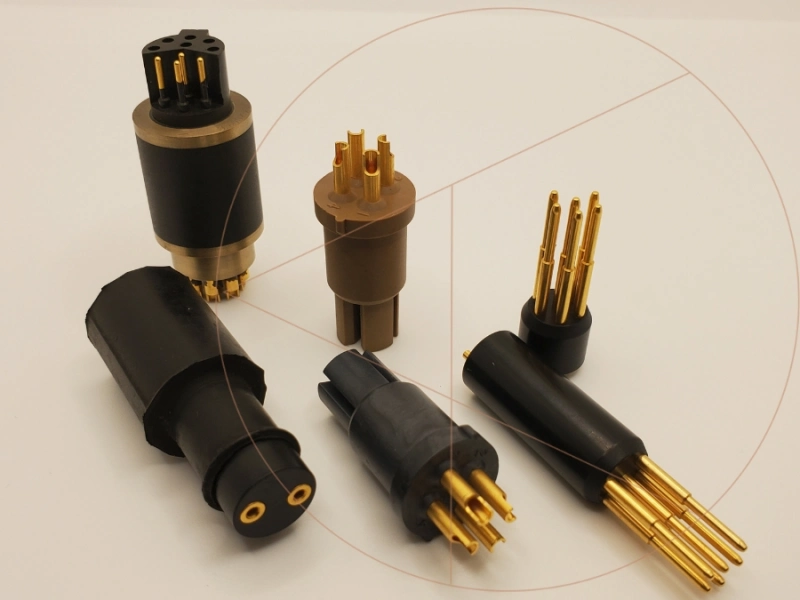
Connectors are more than simple hardware; they are critical interfaces in electronic systems where electrical, mechanical and environmental factors converge.
A connector may appear simple, but every component, socket, pin and shell has a direct impact on your equipment’s signal integrity, assembly efficiency and long-term reliability.
For engineers, designers and specifiers, understanding the anatomy of interconnect components is essential to avoid failures, optimise performance and reduce lifecycle costs. In this guide, we provide an in-depth examination of connector anatomy, practical design guidance, failure mitigation strategies and insight into future trends in interconnect technology.
TL;DR: Key Insights
- Sockets, pins and shells work together to maintain electrical performance and mechanical stability.
- Material selection, plating and tolerances directly affect reliability and lifecycle costs.
- Design decisions influence assembly efficiency, signal integrity and environmental robustness.
- Awareness of failure modes and mitigation strategies reduces costly errors in production and field use.
- Future trends, including miniaturisation and high-speed connectors, require careful specification for next-generation systems.
What is a socket and why does it matter?
Spring Mechanics and Fatigue Life
Sockets typically incorporate spring contacts to maintain consistent pressure against pins. The spring geometry, material and heat treatment determine how the socket behaves under stress, how it accommodates misalignment and its lifespan over repeated mating cycles. Fatigue life is critical in applications like aerospace and industrial automation, where connectors may be mated hundreds or thousands of times.
Material Selection and Plating
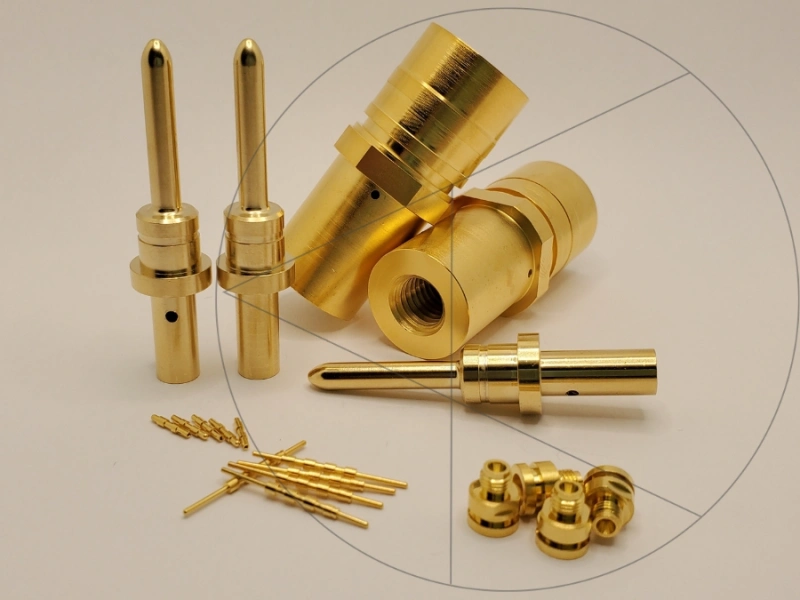
Copper alloys are commonly used for sockets due to their excellent conductivity. Surface coatings, such as gold or nickel, enhance corrosion resistance and reduce contact resistance. The coating thickness, uniformity, and adhesion are critical for long-term performance.
Tolerances and Dimensional Control
Precision tolerances ensure consistent contact and prevent excessive insertion force. Variability in socket dimensions can result in intermittent electrical connections, increased wear or assembly difficulty. By controlling tolerances to micrometre-level precision, manufacturers deliver reliable, repeatable performance.
How do pins influence signal quality and connector durability?
Pins are the primary conductors within a connector. Their design directly affects signal integrity, mechanical reliability and assembly performance.
Pin Geometry and Electrical Performance
The shape and size of a pin can both influence contact resistance, insertion force and signal path impedance. In high-speed applications, improper pin geometry can lead to crosstalk, reflections or insertion loss. Optimising the geometry balances mechanical compliance with electrical performance.
Surface Treatment and Plating
Plating, often gold, tin or nickel, protects pins from corrosion and wear. Gold provides low contact resistance and excellent corrosion resistance for high-reliability applications, while tin is cost-effective for moderate-use scenarios. Plating thickness affects lifecycle performance; too thin can wear quickly, too thick can alter mechanical properties.
Assembly Considerations
Pin type must be compatible with the assembly process. Crimped, press-fit and soldered pins have different insertion forces, tolerances and requirements for tooling. Selecting the correct pin type reduces assembly errors and ensures consistent electrical performance.
Why is the shell more than a protective cover?
The shell is a critical mechanical and electrical element. It ensures correct alignment of the socket and pins, provides EMI shielding and protects the connector against mechanical stress.
Shell Compliance and Mechanical Alignment
Modern shells often include features such as latches, keying and polarisation to prevent misalignment. Compliance in the shell material absorbs vibration and mechanical shock, protecting delicate internal contacts.
Environmental Considerations
In industrial, aerospace or subsea environments, shells must resist moisture, salt spray, thermal cycling and mechanical shock. Material choice (metallic or polymer) and coatings influence the shell’s performance in these conditions.

How do materials and plating choices affect reliability?
Materials and coatings are fundamental to connector performance. Conductive parts require high conductivity and mechanical strength, while insulating parts must maintain dimensional stability.
- Copper alloys and beryllium copper: Provide high conductivity and resilience under stress.
- Plating (gold, silver, nickel): Protects against oxidation, wear and corrosion.
- Insulating polymers: Maintain shape under temperature fluctuations and prevent electrical shorts.
Choosing the right combination requires balancing performance, cost and environmental tolerance. For example, subsea connectors benefit from gold plating for corrosion resistance, whereas automotive connectors may prioritise cost-effective tin plating for moderate reliability needs.
How does precision tolerance impact connector assembly?
Tolerance control ensures pins, sockets and shells fit precisely. Small deviations can increase insertion force, cause intermittent contact or lead to assembly defects.
Pin-to-socket alignment: Critical for high-frequency connectors to maintain impedance and prevent signal loss.
Shell fit and compliance: Ensures that connectors mate correctly under thermal expansion and mechanical stress.
Repeatable performance: Tight tolerances reduce variability in large-scale production, improving yield and reducing rework.
How can connector design improve assembly efficiency?
Connector design can significantly reduce assembly errors and speed up production. Features such as self-aligning pins, keyed shells and visual indicators guide correct mating.
Tooling compatibility — for crimping, press-fit or soldering — ensures repeatable assembly and reduces operator errors.
Example:
Automotive connectors with spring-loaded pins and keyed shells can reduce assembly rework by over 30%, increasing throughput in high-volume production lines.

Common connector failure modes and mitigation strategies
Even precision connectors can fail if design, material or environmental factors are overlooked. Common failure modes include:
- Contact wear – Repeated mating cycles wear pin and socket surfaces. Mitigation: use plated contacts and optimise spring design.
- Corrosion – Moisture or salt ingress causes resistance increase. Mitigation: proper plating, gaskets and sealing.
- Vibration-induced intermittent contact – Movement causes temporary signal loss. Mitigation: compliant springs, shell reinforcement.
- Thermal expansion effects – Differential expansion between materials causes stress. Mitigation: select compatible materials and design compliant assemblies.
Understanding these failure modes allows engineers to specify connectors that are fit for purpose, especially in harsh or critical environments.
How do you select the right interconnect for your project?
Selecting a connector requires assessing electrical, mechanical and environmental requirements:
- Signal type and frequency – Determines impedance and pin geometry requirements.
- Mechanical stresses – Influences material, shell design and spring compliance.
- Environmental exposure – Moisture, vibration, temperature extremes.
- Assembly process – Tooling, insertion forces and volume.
Consulting a precision interconnect manufacturer ensures the connector meets all requirements without over-engineering, reducing cost and risk.
Future trends in interconnect technology
Looking ahead, several trends are shaping connector design:
- High-speed connectors – Optimised for low signal loss and minimal crosstalk.
- Miniaturisation – Smaller connectors require tighter tolerances and precision manufacturing.
- Advanced materials – Composite shells and new plating techniques improve corrosion resistance and reduce weight.
- Smart connectors – Embedded sensing for predictive maintenance and lifecycle monitoring.
Designers need to consider these trends when specifying connectors for future-proof systems.
Work with Astec Precision for your Interconnect Project
If you are designing or specifying interconnects, our team can provide expert guidance on materials, tolerances and assembly optimisation.
We machine components from 0.2mm to 42mm in diameter, across a wide range of materials including exotic alloys, from single prototypes to production runs of one million parts.
Contact our engineering team today to discuss your inconnect requirements.
FAQs
A socket houses the pins and ensures stable electrical contact, while pins transmit the electrical signal.
Plating reduces corrosion, wear and contact resistance, extending connector life.
Yes. Properly designed connectors maintain performance under vibration, moisture and temperature extremes.
Evaluate pin type, mating force, shell alignment and tooling compatibility.
Yes. Conductive materials, plating, and insulating polymers influence resistance, signal loss and reliability.
Precise tolerances ensure correct fit, consistent contact and predictable long-term performance.
Overlooking environmental conditions, underestimating insertion forces or selecting inappropriate materials can cause failures.
Inspection frequency depends on environmental conditions and mating cycles; high-vibration or subsea applications may require more frequent checks.
High-speed connectors are designed to minimise crosstalk, insertion loss, and impedance mismatch, requiring tighter tolerances and precision pin geometry.
Springs maintain consistent contact pressure, absorb mechanical stress and prolong the connector’s service life under repeated mating cycles.
The easiest way to get a quote for your design is to submit an enquiry form where you have the option to attach your file to a maximum of 40 MB. You can also send us an email with details about your project and your requirements. Feel free to give us a call too – we’d love to help you as fast as possible.
Our CAD/CAM process creates detailed 3D models from your drawings and runs simulations to validate the machining process before manufacturing begins. This pre-production validation identifies and resolves potential issues before the first part is produced, ensuring components consistently meet specification across prototype and production volumes.
Yes. We work with our customers from the earliest stages of a project, providing engineering input on manufacturability, material selection and process optimisation before production begins. This early engagement with our customers is valuable for demanding applications, where specification decisions made at the design stage have a significant impact on component performance and manufacturing feasibility.